
KEY TAKEAWAY
The Business Laws (Amendment) Bill 2025 offers significant potential cost-relief for EPZ and SEZ operators, but the actual benefit depends on precise agency interpretation and the removal of administrative friction.
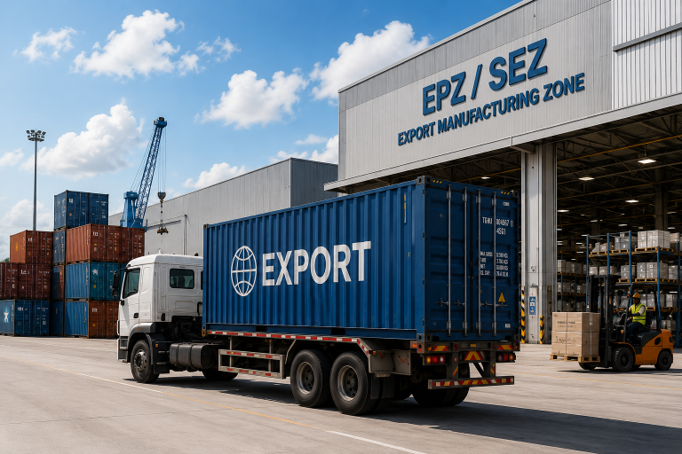
The Business Laws (Amendment) Bill 2025 offers significant potential cost-relief for EPZ and SEZ operators, but the actual benefit depends on precise agency interpretation and the removal of administrative friction.
The Business Laws (Amendment) Bill, 2025, proposes a series of tax and regulatory reforms aimed at enhancing Kenya's export competitiveness. While the headline signal suggests broad cost-relief for EPZ and SEZ developers and operators, the practical impact remains contingent on final enactment and agency-level implementation. Exporters are advised to move beyond the legal text to model specific cost-savings based on their unique operational profiles.
20 Nov 2025
Bill introduction date
Variable
Potential input cost reduction
Kenya
Primary geography of impact
High
Strategic investment priority
The Bill targets specific regulatory burdens that have historically inflated the cost of doing business for export manufacturers.
Why it matters
Without clear operational definitions, the proposed incentives may fail to reach the bottom line.
Long-form analysis
The Business Laws (Amendment) Bill, 2025, represents a concerted effort to align Kenya's regulatory environment with international investment standards. By addressing long-standing complaints regarding regulatory fees and levy friction, the government aims to bolster the attractiveness of EPZs and SEZs as primary hubs for export-oriented manufacturing.
However, the commercial significance of this Bill is not automatic. For manufacturers and developers, the true value lies in the transition from policy intent to administrative reality, where agencies like the KRA and KEBS must align their operational procedures with the new legislative framework.
To capture the benefits of these reforms, firms must move beyond generic analysis. The focus should shift toward building a granular register of all current levies, fees, and VAT exposures that could be mitigated under the new rules.
This involves mapping current HS-code classifications against the proposed exempt categories to identify exactly where the savings will materialize.
The impact of the Bill will vary significantly across sectors. For apparel and textile firms, the primary focus will be on duty and compliance-cost reductions that directly influence margins in a post-AGOA environment.
Conversely, SEZ developers will likely prioritize the expanded VAT zero-rating and licensing changes, which could significantly improve the economics of infrastructure build-out and tenant pricing strategies.
The next 30 to 60 days are critical for industry stakeholders. Engaging in the public participation process via sector associations is essential to ensure that the final legislation is clear and enforceable.
Firms should push for the issuance of implementation circulars immediately upon enactment to prevent the inconsistent agency treatment that often plagues new regulatory frameworks.
TFN bridges the gap between legal text and operational reality to ensure your firm captures the full value of these reforms.