
KEY TAKEAWAY
Exporters must shift from viewing China access as a volatile windfall to treating it as plannable architecture by auditing HS codes and closing GACC registration gaps within 60 days.
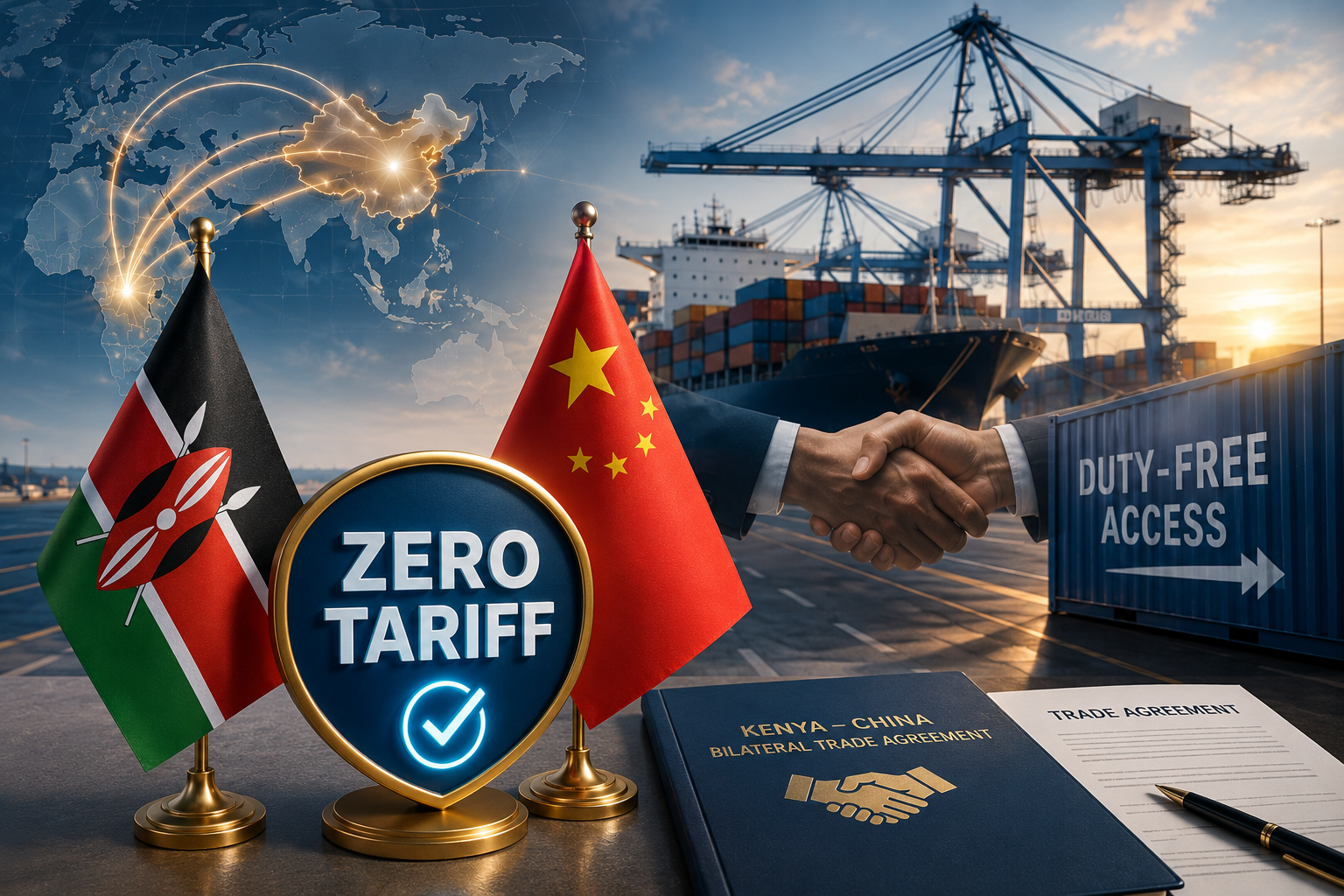
Exporters must shift from viewing China access as a volatile windfall to treating it as plannable architecture by auditing HS codes and closing GACC registration gaps within 60 days.
Kenya has officially finalised a comprehensive bilateral trade agreement with China, solidifying a 98.2% duty-free access framework for Kenyan goods. This treaty-grade instrument provides the necessary legal certainty to move beyond temporary concessions and into long-term market investment. It serves as the cornerstone for exporters looking to scale operations in sectors ranging from horticulture to processed foods.
98.2%
Duty-free access coverage
25 March 2026
Deal finalisation date
60 Days
Registration window
SGR/Mombasa
Primary logistics corridor
The bilateral deal transforms market access from a concession into a durable treaty.
Why it matters
Duty-free on paper does not guarantee clearance at the berth without rigorous execution.
Long-form analysis
The finalisation of the bilateral trade deal marks a fundamental shift in Kenya's trade diplomacy with China. Unlike the FOCAC unilateral zero-tariff measures, which remain subject to Beijing's discretion, this bilateral agreement establishes a reciprocal, treaty-grade framework.
For the exporter, this means the 'Early Harvest' arrangement is now protected by government-to-government commitments. This stability is the missing ingredient required to justify capital expenditure on China-specific packaging, labelling, and long-term buyer relationship development.
Tariff elimination is only the first step in the export process. The binding constraint has now shifted to non-tariff execution, specifically the ability to navigate GACC registration queues and meet stringent sanitary and phytosanitary protocols.
Exporters must treat the documentation chain as a core industrial process. Success will be determined by the precision of certificate-of-origin issuance and the ability to maintain compliance across the entire logistics chain from Mombasa to Chinese ports.
The next 90 days are critical for converting this policy milestone into contracted revenue. With the access stack now complete, the competitive advantage belongs to those who can demonstrate registration readiness and protocol compliance to Chinese buyers.
Associations and government bodies must now scale their support capacity, specifically in digitising origin certification and providing exporter-readable guidance on the duty-free schedule to ensure the benefits of the deal reach the SME sector.
Focus on immediate audit and registration tasks to secure your market position.
Support the volume ramp through improved infrastructure and documentation efficiency.
TFN provides the tools to compress your China market entry timeline.