KEY TAKEAWAY
The successful export of EUDR-compliant coffee by 13 Kenyan cooperatives provides a replicable blueprint for smallholders, effectively removing the 'too complex' barrier to EU market access.
The successful export of EUDR-compliant coffee by 13 Kenyan cooperatives provides a replicable blueprint for smallholders, effectively removing the 'too complex' barrier to EU market access.
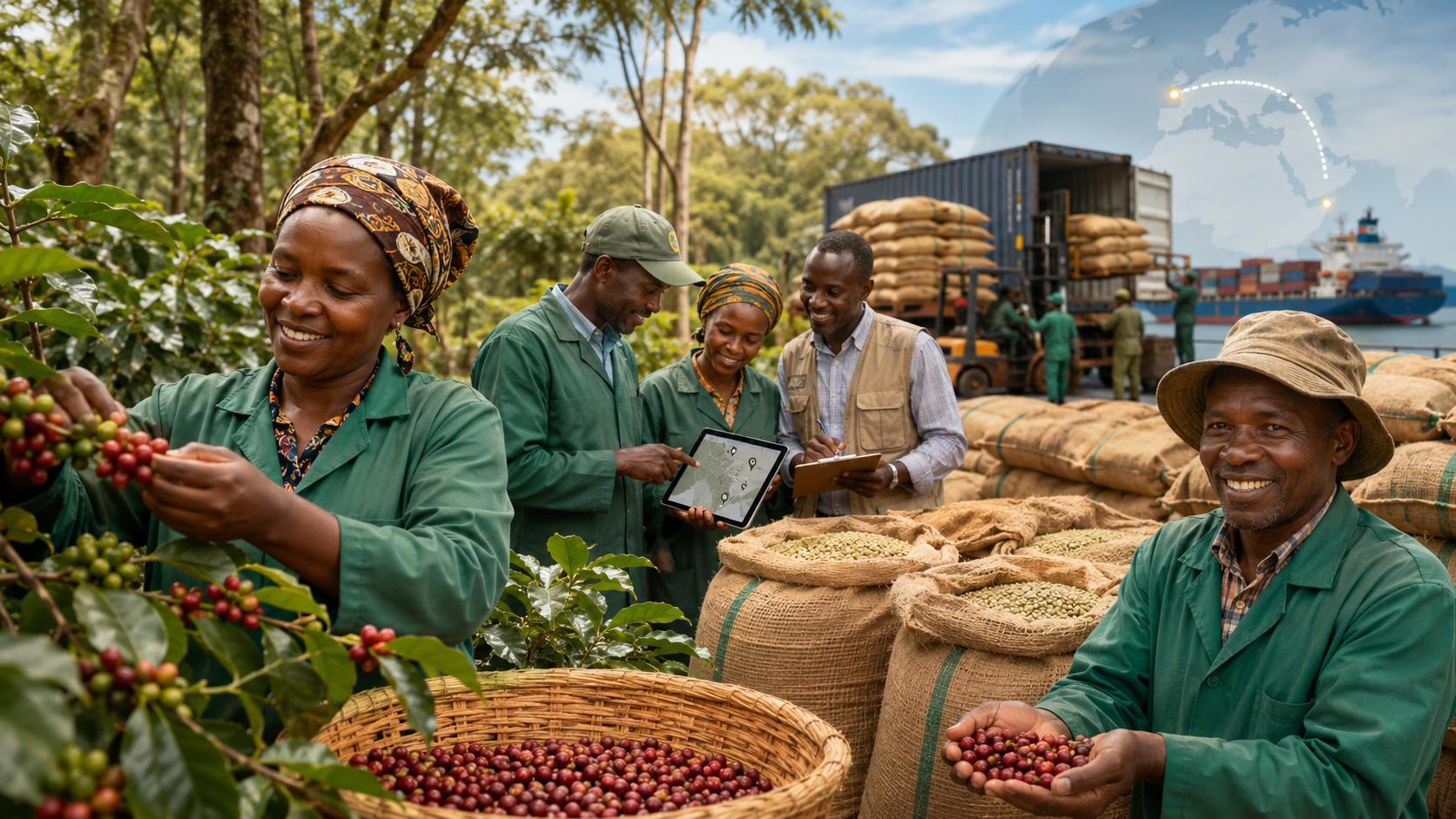
On 24 March 2026, Kenya successfully exported its first consignment of coffee certified under the EU Deforestation Regulation (EUDR). This shipment of 320 bags, destined for Poland, was sourced from 13 cooperative societies under the New Kenya Planters Co-operative Union. It serves as a definitive proof point that smallholder-inclusive models can navigate complex international regulatory landscapes.
19.2 Tonnes
First EUDR-compliant shipment volume
13 Societies
Cooperative network involved in pilot
31 Dec 2020
Deforestation-free cut-off date
90 Days
Target window for national replication
The NKPCU/DIASCA model proves that institutional alignment can overcome regulatory hurdles.
Strategic advantages
Cooperatives failing to adopt this compliance framework face immediate market exclusion.
Long-form analysis
The shipment to Poland converts EUDR from a looming threat into a tangible proof point for the Kenyan coffee sector. By leveraging agroforestry, smallholders with limited land can satisfy both geolocation and deforestation-free requirements while simultaneously adding on-farm value.
This approach transforms the compliance burden into a marketing narrative, positioning Kenyan coffee as both environmentally responsible and socially inclusive.
Success required the alignment of a cooperative union, a traceability initiative, international research partners, and government oversight. This multi-stakeholder coordination is the critical layer that determines whether a project scales or stalls.
Replicating this model at a national level will test Kenya's ability to industrialise these partnerships, moving beyond one-off donor projects to sustainable, systemic compliance.
For private marketers, the consignment changes the nature of buyer conversations. European roasters and importers now have a benchmark, and they will increasingly expect due-diligence documentation as a standard line item in contract negotiations.
Marketers who fail to aggregate from compliant societies will find their access to the EU channel narrowing, as compliant volumes command preferential allocation.