
KEY TAKEAWAY
Kenya possesses the raw materials and market access to scale its leather industry, but success depends on converting these advantages into buyer-ready products and compliant supply chains rather than relying on policy alone.
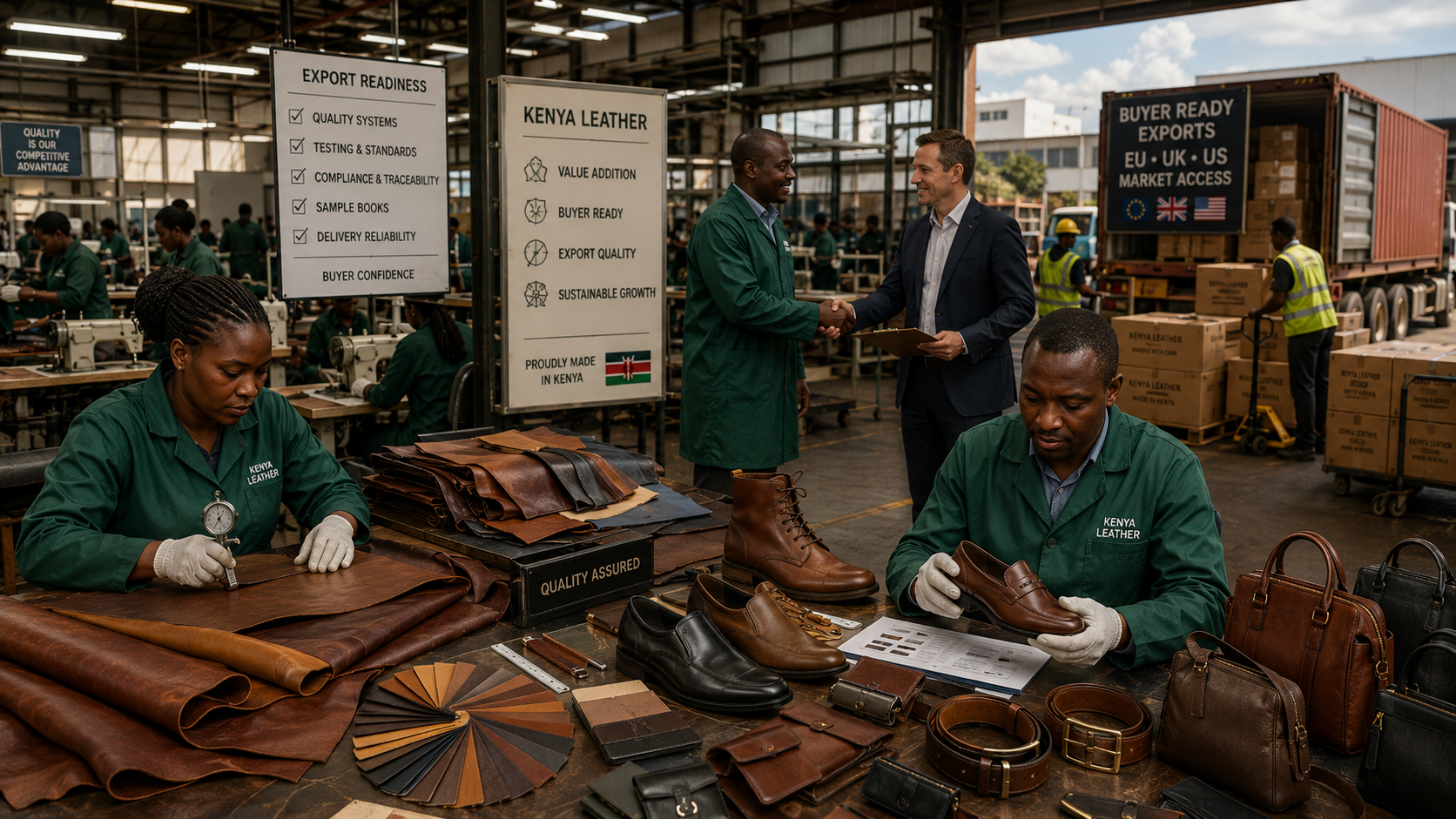
Kenya possesses the raw materials and market access to scale its leather industry, but success depends on converting these advantages into buyer-ready products and compliant supply chains rather than relying on policy alone.
InvestKenya has identified a significant industrial transformation opportunity, projecting that Kenya's leather sector could grow from USD 80 million in 2022 to USD 850 million by 2040. While the strategic logic is supported by vast livestock resources and preferential trade access to the EU, UK, and US, the sector currently lacks the disciplined conversion systems required to turn this potential into actual export contracts. This update examines how stakeholders can move beyond policy rhetoric to build a credible, export-oriented leather ecosystem.
USD 850M
Projected sector value by 2040
31 Dec 2026
AGOA access expiry date
21M cattle
Livestock resource base
USD 80M
Estimated sector value in 2022
Kenya holds structural benefits that provide a strong foundation for industrial growth.
Why it matters
The path to the USD 850 million target is obstructed by several critical operational gaps.
Long-form analysis
The InvestKenya projection of USD 850 million by 2040 is not merely a growth target; it is an industrial thesis. It requires a fundamental shift in how the sector handles everything from slaughterhouse hygiene to the final finishing of leather goods.
To capture this value, stakeholders must move beyond generic promotion and focus on specific bottlenecks, including finishing lines, chemical testing laboratories, and workforce upskilling.
Market access through the EU, UK, and AGOA provides a vital window, but it is not a substitute for commercial competitiveness. Buyers in these regions demand rigorous product consistency, delivery reliability, and compliance evidence.
The extension of AGOA to December 2026 provides breathing room, but firms must treat this as a temporary window to build non-AGOA buyer relationships and fallback market strategies.
The immediate priority is the implementation of a leather export growth sprint. This involves mapping firm-level capacity against market requirements and addressing financing gaps.
Simultaneously, county-level programs must prioritize hide quality to ensure that the raw material entering the value chain is suitable for export-grade finished leather.