
KEY TAKEAWAY
Kenya must transition from a singular focus on phytosanitary compliance to a dual-track strategy that maintains current market volumes while aggressively converting orchard varieties to meet EU-preferred demand.
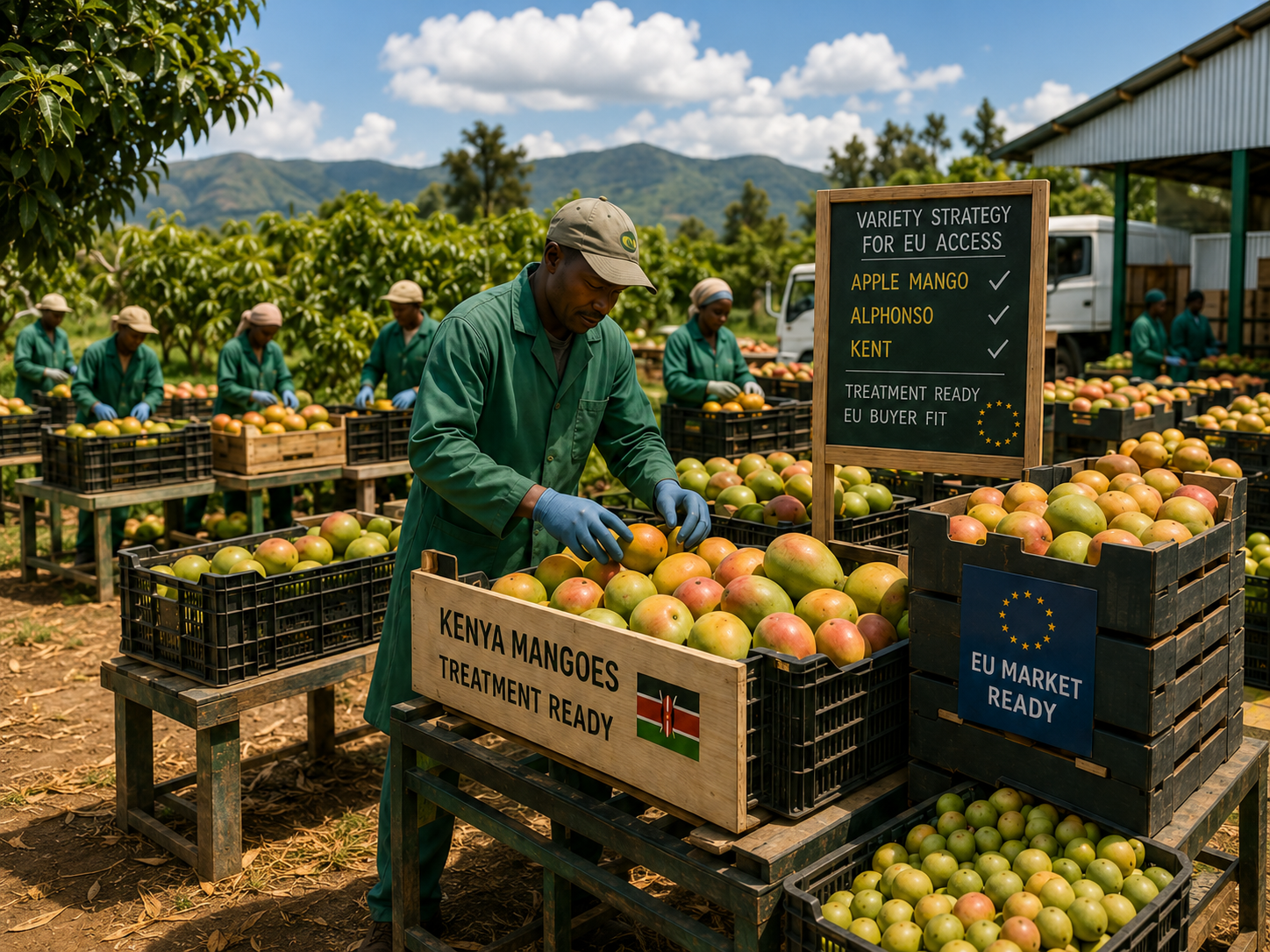
Kenya must transition from a singular focus on phytosanitary compliance to a dual-track strategy that maintains current market volumes while aggressively converting orchard varieties to meet EU-preferred demand.
Kenya has successfully restored a pathway for mango exports to the EU, yet meaningful shipment volumes remain elusive. Industry analysis reveals that the binding constraint has shifted from regulatory pest-control protocols to a critical misalignment in product variety. While farmers prioritize the Apple Mango, European buyers consistently demand varieties such as Alphonso and Kent.
3-5 Years
Estimated variety conversion timeline
2 Gates
Regulatory vs. Commercial access
Dual-Track
Required export strategy
100%
Focus on market-aligned varieties
Kenya has made significant strides in overcoming previous export suspensions by addressing phytosanitary requirements.
Why it matters
Regulatory compliance is necessary but insufficient if the product does not meet specific retail and consumer demands in the EU.
Long-form analysis
For years, the narrative surrounding Kenyan mango exports was defined by fruit-fly concerns and the subsequent EU export suspension. The sector has since invested heavily in treatment infrastructure and certification protocols to satisfy international standards.
However, the reopening of the EU market has not triggered the expected surge in trade. The industry is now confronting the reality that regulatory access is only the first of two critical gates; the second is commercial viability, which is currently hindered by a reliance on the Apple Mango variety.
To achieve sustainable growth, Kenya must implement a structured variety-conversion roadmap. This is not a short-term fix but a medium-term programme that requires coordination across nurseries, county governments, and farmer cooperatives.
Conversion efforts must be supported by certified planting material and demonstration orchards to ensure that farmers can transition to Alphonso and Kent varieties without sacrificing their immediate livelihoods.
The ultimate goal is to create a portfolio strategy that balances immediate cash-flow markets with future premium opportunities. By separating these channels, exporters can maintain volume while building the necessary infrastructure for the EU.
Success will be measured by the ability to provide consistent, high-quality volumes of buyer-preferred varieties, backed by a transparent and reliable supply chain.
TFN provides the structured tools necessary to transform these strategic challenges into actionable implementation plans.