KIFWA Strike Threat Exposes the Shipping-Line Compliance Gap Behind Mombasa CFS Congestion
1/3
Executive Summary
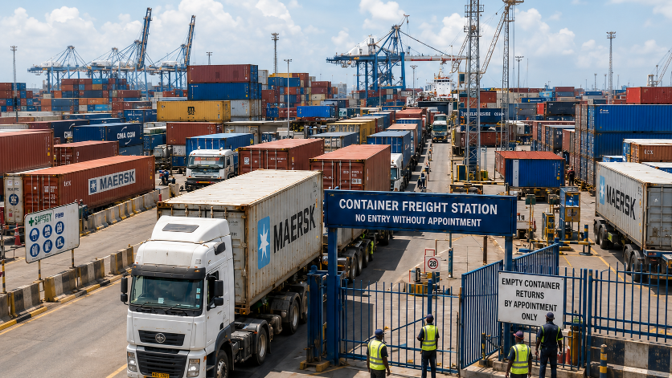
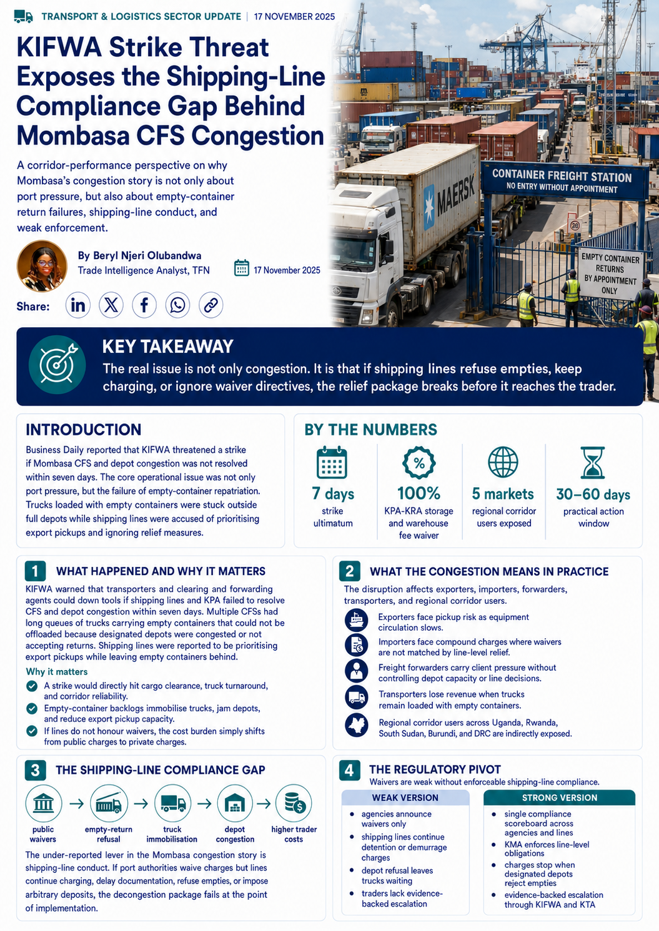
Business Daily reported on 17 November 2025 that transporters and clearing and forwarding agents, through the Kenya International Freight and Warehousing Association (KIFWA), threatened to down tools if congestion at Mombasa's Container Freight Stations (CFSs) and container depots was not resolved within seven days. The immediate operational problem was not only port congestion. It was the failure of empty-container repatriation: long queues of trucks loaded with empty containers were stuck at multiple CFSs and depots because depots lacked space and shipping lines were prioritising export pickups while leaving empties behind.
The dispute escalated because KIFWA accused shipping lines of refusing to honour the KPA-KRA 100% waiver on storage and customs-warehouse fees, even as KPA and KRA had moved to ease long-stay cargo pressure. KIFWA National Secretary Musa Mbira challenged the Kenya Maritime Authority (KMA) to compel shipping lines to comply with waiver and demurrage directives. Mombasa KIFWA Chairman Rajab Hamisi went further, arguing that the same shipping lines comply with regulations in Tanzania but act with impunity in Kenya.
The strategic signal is sharp: the under-reported lever in the Mombasa congestion story is shipping-line conduct. If port authorities waive charges but shipping lines continue charging, refusing empties, delaying documentation, or imposing arbitrary deposits, the relief package fails at the point of implementation. This turns a congestion problem into a regulatory enforcement problem. For TFN, the opportunity is to convert this into a public-good metric: a Shipping-Line Compliance Index inside the Mombasa Corridor Reform Tracker.
Structured Output
1) What happened and why it matters
• KIFWA warned that transporters and clearing and forwarding agents could down tools if shipping lines and KPA failed to resolve CFS and depot congestion within seven days.
• Multiple CFSs had long queues of trucks carrying empty containers that could not be offloaded because designated depots were congested or not accepting returns.
• Shipping lines were reported to be prioritising export pickups while leaving empty containers behind, worsening truck immobilisation and depot congestion.
• The congestion was aggravated by cargo diversion from Dar es Salaam following Tanzania's election period, adding pressure to Mombasa's already stretched port and depot system.
• KIFWA accused shipping lines of refusing to complement KPA and KRA's 100% waivers and called on KMA to enforce compliance.
Why it matters (so what)
• A strike by clearing agents and transporters would not be a normal labour disruption. It would directly hit cargo clearance, container movement, truck turnaround, and regional corridor reliability.
• Empty-container backlogs are not a side issue. If empties cannot be returned, trucks remain immobilised, depots jam, exports lose pickup capacity, and importers absorb avoidable costs.
• The KPA-KRA waiver only solves part of the problem. If shipping lines do not waive detention and demurrage or accept empty returns, the cost burden simply shifts from public charges to private line charges.
• The comparison with Tanzania is commercially damaging. If the same shipping lines comply in Tanzania but resist in Kenya, investors and traders read that as a Kenyan enforcement weakness, not just a logistics glitch.
2) What the congestion means for exporters, importers, and forwarders in practice
• Exporters face pickup risk because shipping lines prioritising export containers does not solve the underlying empty-container circulation problem. If empties clog depots, the entire equipment cycle slows.
• Importers face compound charges where public storage waivers are not matched by shipping-line waivers, detention relief, or operational acceptance of empty returns.
• Freight forwarders and clearing agents carry client pressure without controlling the return location, depot capacity, or line-level documentation decisions.
• Transporters lose revenue because trucks cannot be redeployed while loaded with empty containers waiting outside full depots.
• Corridor users in Uganda, Rwanda, South Sudan, Burundi, and the DRC are indirectly exposed because Mombasa is a regional gateway, not a purely Kenyan port facility.
3) The regulatory gap: waivers are weak without enforceable shipping-line compliance
The KPA-KRA response was a necessary congestion-relief measure, but it is insufficient if private operators do not align. A public waiver does not automatically remove demurrage, detention, delivery-order charges, documentation delays, arbitrary deposits, or refusal to accept empties. The missing link is enforceable compliance by shipping lines, supported by KMA directives, documented evidence from industry, and consequences for non-compliance.
• The weak version of reform: agencies announce waivers, but firms continue charging or refusing operational responsibility through contract language and depot designations.
• The strong version of reform: KPA, KRA, KMA, KIFWA, KTA, CFS operators, and shipping lines use a single compliance scoreboard showing which obligations are being honoured and where costs are still being imposed.
• The enforcement point is simple: if a truck reaches a designated return depot and the depot cannot accept the empty container, detention or delay charges should not continue to accrue against the trader, transporter, or agent.
4) The commercial pivot: document everything and escalate through the right channel
Exporters, importers, freight forwarders, and transporters should treat this as an evidence-management issue. Complaints without timestamps, photos, delivery attempts, depot names, rejection records, and charge invoices are easy to dismiss. Evidence-backed escalation is harder to ignore and can support KIFWA, KTA, KMA, KPA, and KRA action.
• Maintain a container-return evidence pack: container number, depot name, arrival time, rejection reason, photo evidence, queue position, written notice, and next instruction received.
• Track charges separately: public storage, customs warehouse rent, demurrage, detention, delivery order, terminal handling, truck demurrage, and inconvenience fees.
• Escalate waiver non-compliance through KIFWA and KMA with evidence, not general complaints.
• Use buyer and client communication templates explaining that the delay is linked to depot capacity and line acceptance, not weak exporter or forwarder execution.
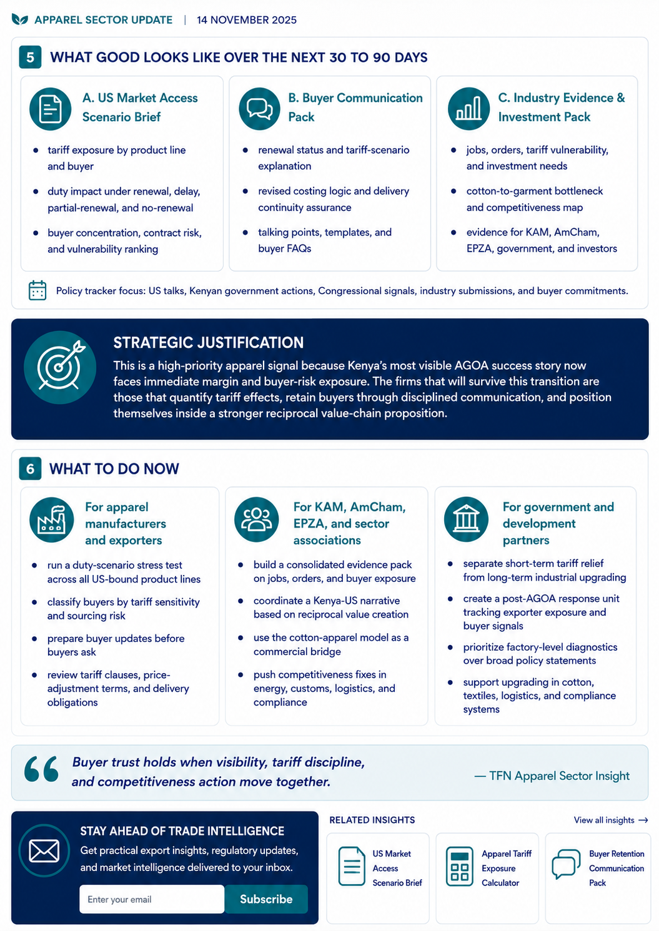
5) What good looks like over the next 30 to 60 days
1. A Shipping-Line Compliance Index showing which lines are waiving detention/demurrage, accepting empties, issuing documentation on time, and providing operational return locations.
2. A CFS and depot congestion dashboard showing empty-container acceptance status, queue length, truck waiting time, and available return windows.
3. A KMA enforcement tracker showing directives issued, lines covered, non-compliance cases opened, and actions taken.
4. A weekly Mombasa corridor stakeholder stand-up involving KPA, KRA, KMA, KIFWA, KTA, CFS operators, shipping lines, and corridor users.
5. A trader evidence protocol that standardises proof required to challenge wrongful detention, demurrage, or depot-refusal charges.
Strategic Justification
This is a high-priority transport and logistics signal because it exposes a hidden execution failure inside the Mombasa congestion crisis. The problem is not simply that the port is busy. The problem is that the cost-relief and decongestion chain breaks when shipping lines do not align with public directives or operational realities at CFSs and depots.
For Kenya's corridor competitiveness, this matters more than the headline suggests. A port can announce waivers, but if traders still face private detention, demurrage, documentation delays, depot refusal, and truck immobilisation, the effective cost of trade remains high. That damages Mombasa's competitiveness against Dar es Salaam and weakens Kenya's claim to be the most reliable East African logistics gateway.
For TFN, this entry should feed directly into the Mombasa Corridor Reform Tracker and become a public-good diagnostic. The right product is not a generic port-congestion note. It is a Shipping-Line Compliance Index that tracks whether private logistics actors are helping resolve congestion or monetising it.
Call to Action / Integration Tip (how to use this immediately)
For exporters, importers, and freight forwarders
• Create a waiver-compliance file for every affected consignment, separating KPA/KRA charges from shipping-line charges.
• Document empty-container return attempts using timestamps, depot names, photos, gate records, rejection messages, and truck waiting time.
• Escalate non-compliance through KIFWA and KMA with evidence rather than broad complaints.
• Update buyers and clients using factual disruption language that distinguishes infrastructure congestion from operator non-compliance.
For KIFWA, KTA, and private-sector associations
• Consolidate case evidence into a shipping-line compliance dossier by line, depot, charge type, and affected corridor user.
• Push KMA to publish enforcement status, including directives issued and confirmed compliance by shipping lines.
• Develop a standard evidence checklist that members can use to challenge wrongful detention, demurrage, or depot-refusal costs.
• Use the strike threat as leverage for measurable commitments, not only a temporary decongestion response.
For TFN productization
• Add this case to the Mombasa Corridor Reform Tracker under Shipping-Line Compliance and Empty-Container Repatriation.
• Build a Shipping-Line Compliance Index scoring waiver adherence, demurrage/detention behaviour, documentation responsiveness, empty acceptance, and dispute-resolution conduct.
• Create a Container Return Evidence Pack for exporters, importers, freight forwarders, and transporters.
• Develop a Mombasa CFS Congestion Brief that translates port disruption into operational actions for corridor users, donors, and regulators.
McKinsey playbook lens: Treat this as an accountability architecture problem, not only a congestion problem. The winning operating model is evidence capture, obligation mapping, compliance scoring, regulatory escalation, and public performance visibility. The metric is not only port throughput; it is whether the cost-relief promise reaches the trader.
CTA: Chat with Trade Facilitation in a Nutshell
This is exactly the kind of corridor execution problem TFN was built to solve: where public policy, port operations, private shipping-line behaviour, freight-forwarder obligations, and trader costs collide. The issue is not lack of information. The issue is that the information is scattered, undocumented, and not converted into decisions.
TFN can help exporters, importers, logistics firms, private-sector associations, corridor institutions, and donor programs turn this kind of congestion event into a structured response system.
How TFN can help solve this class of problem
• Shipping-Line Compliance Index: a public-good metric tracking whether shipping lines honour waivers, accept empties, issue documents on time, and comply with KMA directives.
• Mombasa Corridor Reform Tracker: a dashboard-led reform tool covering port congestion, CFS bottlenecks, customs actions, empty-container return, and stakeholder accountability.
• Container Return Evidence Pack: templates for documenting depot refusal, queue time, charge exposure, and escalation evidence.
• Buyer and Client Communication Pack: clear, factual messages for exporters and forwarders explaining congestion-driven delays without damaging credibility.
• Regulatory Escalation Brief: a structured pack for KIFWA, KTA, KMA, KPA, KRA, and donor programs to identify where the compliance chain is breaking.
Work with TFN: If your company, association, corridor institution, or donor program is exposed to Mombasa congestion, shipping-line non-compliance, CFS delays, or empty-container return problems, use this case as the trigger to build a standing evidence and response system before the next disruption becomes a cost crisis. Visit Trade Facilitation in a Nutshell to request a corridor disruption diagnostic, compliance tracker, or container-return evidence pack.