
KEY TAKEAWAY
The combination of seasonal port congestion and a specific transit-levy dispute has created a systemic dwell-time shock that requires proactive communication and buffer-based logistics planning.
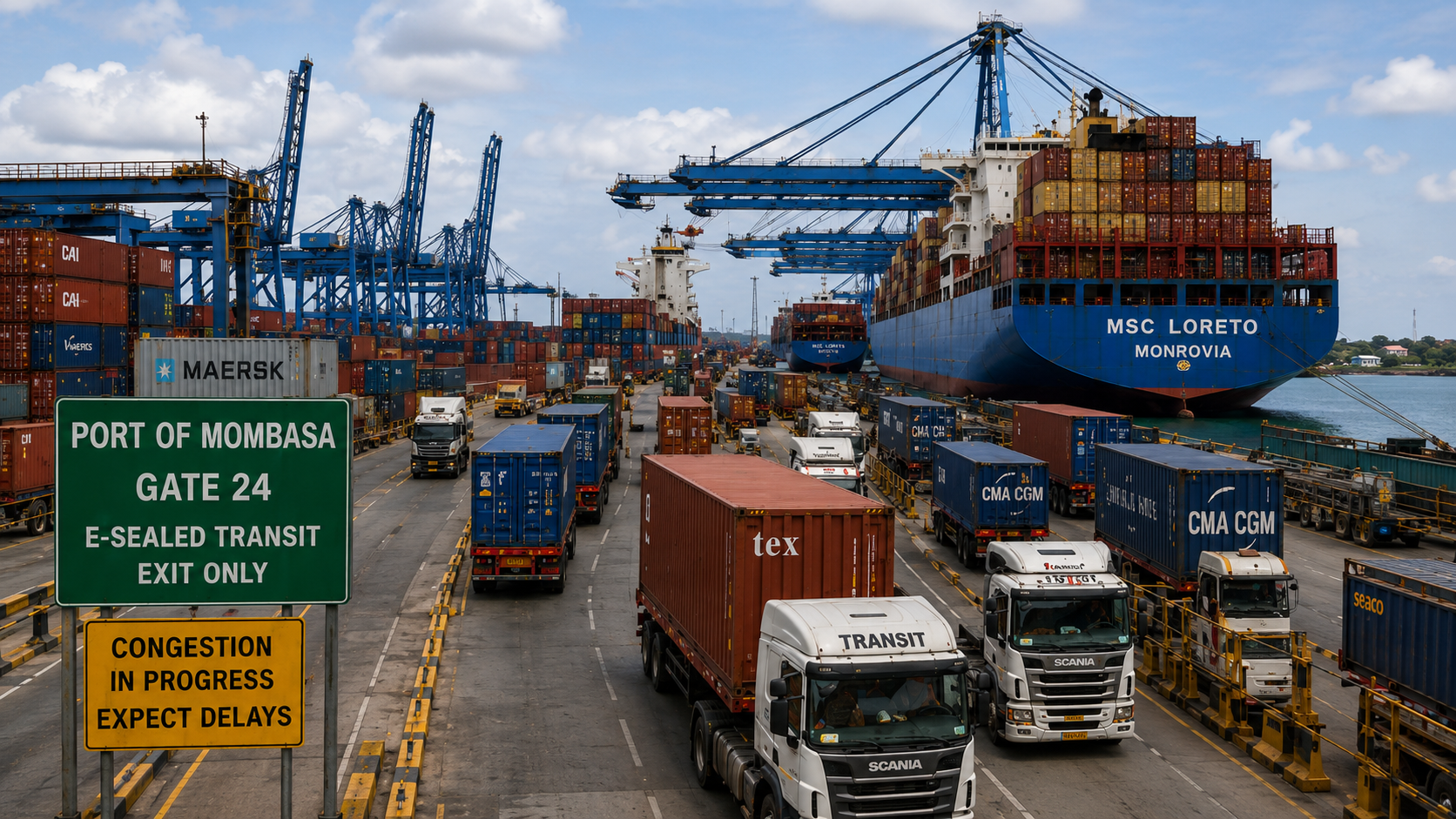
The combination of seasonal port congestion and a specific transit-levy dispute has created a systemic dwell-time shock that requires proactive communication and buffer-based logistics planning.
Mombasa port is currently navigating an acute congestion crisis as it manages peak December import volumes alongside cargo spillover from Dar es Salaam. The situation has been further complicated by a diplomatic and commercial dispute regarding a USD 5,000 security levy on South Sudan-bound containers, which has stalled cargo movement and distorted yard operations. This convergence of operational and policy-driven bottlenecks poses a direct threat to time-sensitive festive-season retail and export commitments.
3,500 TEUs
Daily average port throughput
28 vessels
Vessels currently waiting to berth
56 vessels
Ships expected over next 14 days
USD 5,000
Disputed security levy per Juba-bound container
The Kenya Ports Authority and KRA have implemented immediate tactical responses to alleviate terminal pressure.
Why it matters
The current environment presents multiple layers of risk that threaten the predictability of the Northern Corridor.
Long-form analysis
The current congestion at Mombasa is not an isolated event but a result of compounding pressures. With 28 vessels waiting to berth and a heavy pipeline of 56 ships expected in the next fortnight, the port is operating at the edge of its capacity. The influx of spillover cargo from Dar es Salaam has effectively erased the buffer capacity usually available during the peak season.
This has forced a shift in operational strategy, moving cargo from the port to inland depots and CFSs. While this clears the immediate yard, it introduces new complexities for importers who must now manage logistics across multiple inland locations.
The USD 5,000 security levy on Juba-bound containers has transformed a logistical challenge into a governance crisis. By creating a financial barrier that agents are actively avoiding, the levy has caused hundreds of containers to pile up, effectively creating a 'dead zone' in the port yard.
This dispute highlights the fragility of transit corridors when charges are perceived as discriminatory or poorly communicated. When cargo becomes a liability due to unpredictable costs, the entire flow of the corridor is disrupted, regardless of port efficiency.
The current situation reveals a fundamental weakness in East African trade: the lack of a unified, regional operating system. When one gateway fails, the substitute is quickly overwhelmed because port, customs, and transport capacity are managed in silos.
For shippers, the lesson is clear: reliance on a single corridor without contingency planning is a major vulnerability. Predictability is now the most valuable commodity in the region.
Moving forward, stakeholders must shift from reactive firefighting to proactive corridor management. This requires transparent, real-time data on vessel queues and a collaborative approach to resolving transit charges.
The goal for the next 60 days should be the establishment of a 'control-tower' view that allows all participants to anticipate bottlenecks before they manifest as full-scale supply chain failures.
TFN provides the tools and frameworks to navigate complex corridor disruptions.