KEY TAKEAWAY
The Northern Corridor is now so digitally dependent that political-risk events in transit countries can cause systemic operational failure. Exporters must shift from reactive waiting to proactive offline continuity planning.
The Northern Corridor is now so digitally dependent that political-risk events in transit countries can cause systemic operational failure. Exporters must shift from reactive waiting to proactive offline continuity planning.
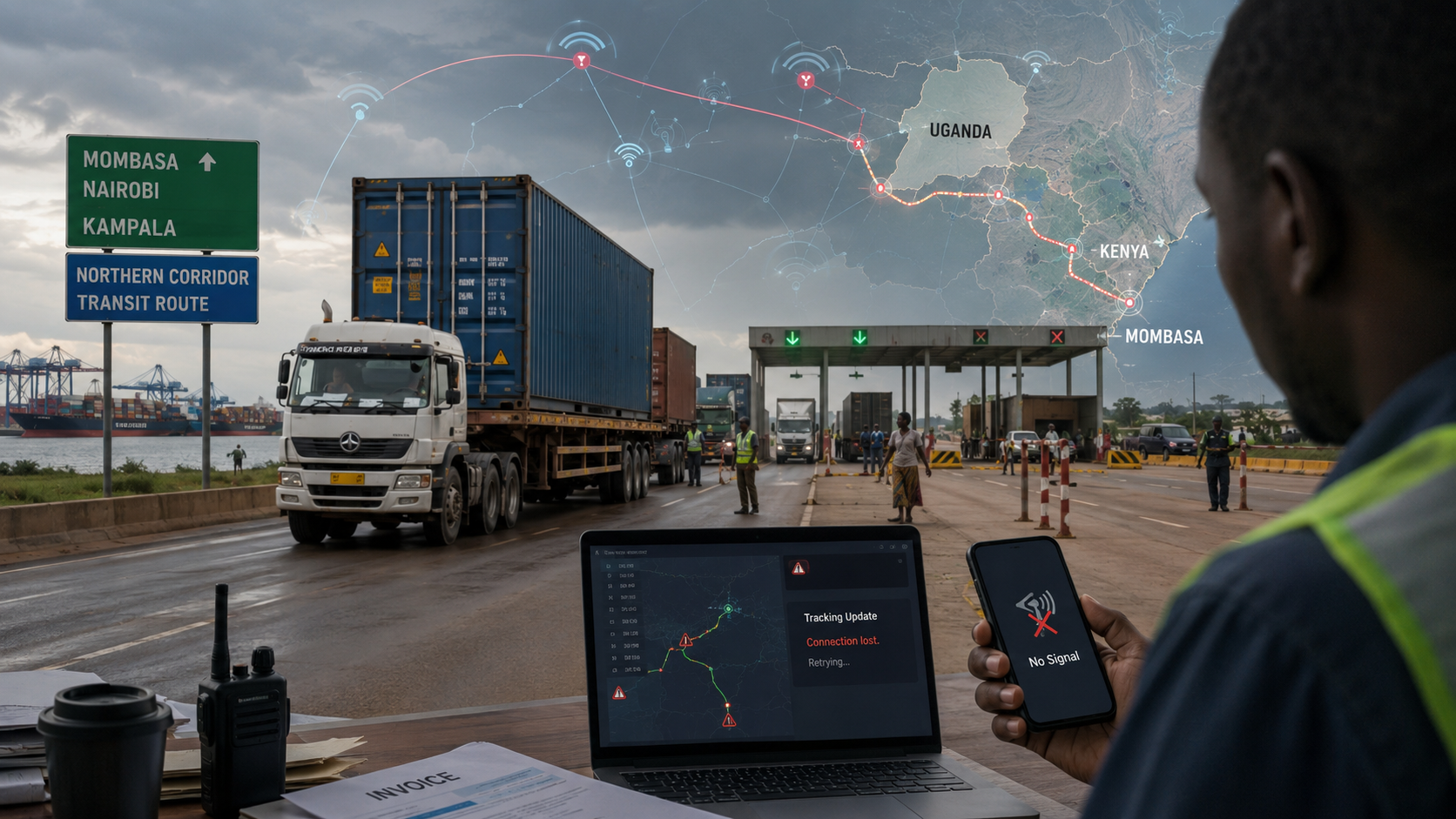
Uganda’s national internet shutdown from 13 to 17 January 2026, coinciding with general elections, caused significant disruptions to trade along the Northern Corridor. The blackout effectively blinded logistics operators, rendering real-time tracking, invoicing, and driver communication systems inoperable. This event highlights a growing vulnerability where political instability in a transit nation directly compromises the operational integrity of regional supply chains.
1,700km
Northern Corridor length
65.6%
Uganda's share of Mombasa transit
1,500
Trucks on corridor at any time
4 days
Duration of internet blackout
Key areas where digital dependency creates immediate friction during political instability.
Why it matters
The broader consequences of a digital blackout on corridor-wide logistics performance.
Long-form analysis
The disruption in Uganda was not merely a political event; it was a digital continuity failure. Because logistics workflows are deeply integrated with mobile data and messaging applications, the shutdown effectively paralyzed the control layer of the supply chain.
While physical cargo continued to move, the lack of connectivity meant that the control systems became blind, preventing the coordination required for efficient border crossing and final delivery.
The most effective response is to design fallback layers that maintain visibility without relying on public internet. This does not mean abandoning digital systems, but rather ensuring that basic operations can persist during a crisis.
Transporters should implement SMS-based status codes and maintain standardized paper waybill packs to ensure that drivers have clear instructions and emergency contacts regardless of network status.
Over the next 30 to 60 days, stakeholders must integrate political-risk alerts into their performance dashboards. By mapping high-value cargo against transit-country political calendars, firms can build necessary delivery buffers.
Developing a 'digital dependency score' for shipments will help identify which consignments are most at risk, allowing for more targeted risk-mitigation strategies during future security events.
TFN provides the tools to transform political-risk signals into actionable logistics resilience.